How Much Does Enterprise Web Development Cost in 2025?
Meta Title: How Much Does Enterprise Web Development Cost in 2025? | Altus Meta Description: Wondering how much enterprise web development costs in 2025? We break down real pricing for US businesses — from simple corporate sites to complex AI-powered platforms. Focus Keyphrase: enterprise web development cost 2025 Category: Web Solutions Tags: Enterprise Web Development, Web Development Cost, Website Pricing, Custom Web Development, Enterprise CMS, Web Design Cost, US Business Slug: enterprise-web-development-cost-2025
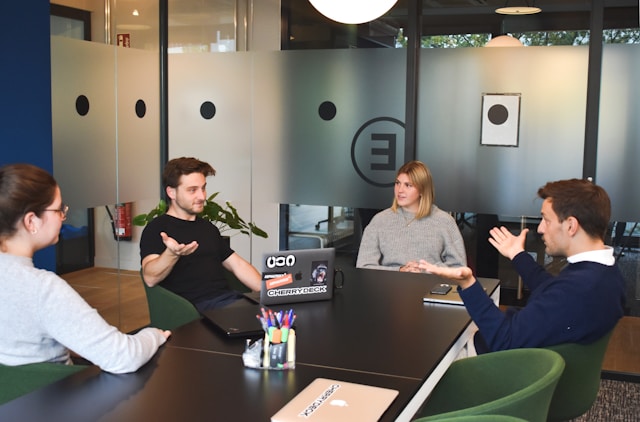
📸 IMAGE: A professional team reviewing a web development project on a large screen — search “web development team meeting” on Unsplash.com Alt text: Enterprise web development cost guide 2025
Introduction
One of the most common questions we receive from US businesses is: “How much does enterprise web development actually cost?”
The honest answer is — it depends. But that answer alone isn’t helpful. What you actually need is a clear breakdown of what drives cost, what you should expect to pay for different types of projects, and how to ensure every dollar you spend delivers measurable return.
In this guide, we’ll give you real numbers, honest expectations, and practical advice on budgeting for enterprise web development in 2025 — based on our experience delivering projects for businesses across the US and UK.
Why Enterprise Web Development Costs More
Before diving into numbers, it’s important to understand why enterprise web development is priced differently from a standard business website.
A £500 website template and a £150,000 enterprise platform are both technically “websites” — but the comparison ends there. Enterprise web development involves:
- Custom architecture — built from the ground up for your specific business requirements
- System integrations — connecting your website to CRM, ERP, marketing automation, payment systems, and third-party APIs
- Security and compliance — enterprise-grade security protocols, data protection compliance, and penetration testing
- Scalability engineering — infrastructure designed to handle millions of visitors without performance degradation
- Content management — custom CMS implementation allowing non-technical teams to manage complex content
- Performance optimisation — Core Web Vitals compliance, CDN configuration, and load time optimisation
- Ongoing support — dedicated maintenance, security updates, and continuous improvement
Each of these adds cost — but each also adds measurable business value.
📸 IMAGE: A clean diagram showing layers of web development complexity — search “web development architecture” on Unsplash.com Alt text: Enterprise web development architecture and complexity
Enterprise Web Development Cost Tiers in 2025
Here’s a realistic breakdown of what US businesses should expect to invest at different levels of complexity:
Tier 1 — Professional Corporate Website
Investment: $15,000 – $40,000
What you get:
- Custom designed, branded website (8–20 pages)
- WordPress or similar CMS
- Mobile responsive and performance optimised
- Basic SEO setup
- Contact forms and lead capture
- Standard security setup
- 3–6 months delivery
Best for: Professional services firms, consultancies, small B2B companies, local enterprises needing a credible digital presence.
Tier 2 — Advanced Business Website with Integrations
Investment: $40,000 – $100,000
What you get:
- Custom designed website (20–50+ pages)
- Enterprise CMS (WordPress, Umbraco, or Sitefinity)
- CRM integration (Salesforce, HubSpot, Dynamics 365)
- Marketing automation connection
- Advanced SEO architecture
- Custom functionality and interactive elements
- Multi-language support
- Performance and security hardening
- 4–8 months delivery
Best for: Mid-market businesses, regional enterprises, companies with complex content requirements or multiple audience segments.
Tier 3 — Enterprise Digital Platform
Investment: $100,000 – $300,000+
What you get:
- Fully bespoke digital ecosystem
- Multi-site or multi-brand architecture
- Deep ERP/CRM integration
- AI-powered personalisation
- Custom web application features
- Advanced analytics and reporting
- Headless CMS architecture
- Enterprise security and compliance
- Dedicated project team
- 6–18 months delivery
Best for: Large enterprises, global companies, organisations managing multiple brands or regions, businesses requiring sophisticated digital capabilities.
Tier 4 — AI-Powered Enterprise Platform
Investment: $150,000 – $500,000+
What you get:
- Everything in Tier 3
- Custom AI integration (GPT-4o, Claude, or proprietary models)
- AI-powered customer engagement systems
- Intelligent automation workflows
- Machine learning personalisation engine
- RAG-powered knowledge bases and AI assistants
- Real-time data processing and analytics
- Custom API ecosystem
- 9–24 months delivery
Best for: Forward-thinking enterprises ready to leverage AI as a competitive advantage, companies with complex automation requirements, businesses building AI-first digital operations.
📸 IMAGE: A modern enterprise dashboard showing analytics and data — search “enterprise analytics dashboard” on Unsplash.com Alt text: Enterprise web platform analytics and reporting
What Drives the Cost Up?
Understanding cost drivers helps you make smarter decisions about where to invest and where to be practical.
1. Number of Integrations
Every third-party system your website needs to connect with adds development time and complexity. A website connecting to Salesforce, HubSpot, a payment gateway, an ERP system, and a custom API will cost significantly more than one that stands alone.
Cost impact: $5,000 – $30,000+ per major integration
2. Custom Functionality
Standard web functionality — contact forms, blog, image galleries — is relatively cheap to implement. Custom functionality — booking engines, configurators, client portals, custom calculators, real-time data feeds — requires significantly more development time.
Cost impact: $10,000 – $80,000+ depending on complexity
3. Content Volume
A 10-page website costs far less to build than a 500-page enterprise resource with complex content hierarchies, filtering systems, and search functionality.
Cost impact: $200 – $1,000 per additional complex page
4. Design Complexity
Template-based design is efficient but generic. Fully custom design — with bespoke animations, interactive elements, and pixel-perfect brand execution — requires significantly more design hours.
Cost impact: $10,000 – $50,000 for full custom design
5. Performance Requirements
A website expecting 1,000 monthly visitors needs very different infrastructure to one expecting 1,000,000. High-traffic enterprise platforms require advanced hosting architecture, CDN configuration, and load balancing.
Cost impact: $500 – $5,000/month in infrastructure costs
6. Compliance Requirements
Healthcare organisations (HIPAA), financial services (SOC 2, PCI DSS), and government agencies have strict compliance requirements that add significant cost to web development projects.
Cost impact: $15,000 – $60,000+ for compliance implementation
What Drives the Cost Down?
Clear requirements from the start
Projects with detailed, well-defined requirements cost less than those where the scope evolves throughout delivery. Investing in a thorough discovery phase upfront saves money overall.
Existing brand assets
If you have a comprehensive brand guide, established design system, and high-quality assets ready to go, design costs are significantly lower.
Phased delivery
Rather than building everything at once, a phased approach — launching core functionality first, then adding features over time — spreads cost and allows you to validate ROI before committing full budget.
Choosing the right platform
Selecting a platform that fits your requirements rather than the most complex option available saves both upfront and ongoing costs. An enterprise WordPress build often delivers the same business outcomes as a Sitefinity implementation at a fraction of the cost.
📸 IMAGE: A business person reviewing a budget plan on a laptop — search “business budget planning” on Unsplash.com Alt text: Enterprise web development budget planning
Ongoing Costs to Factor In
Many businesses focus solely on the build cost and overlook ongoing operational costs. Here’s what to budget for annually:
| Cost Category | Typical Annual Cost |
|---|---|
| Hosting (enterprise) | $3,000 – $30,000 |
| CMS licensing (if applicable) | $0 – $50,000 |
| Security monitoring | $1,200 – $6,000 |
| Maintenance & updates | $6,000 – $36,000 |
| Content updates | $3,000 – $24,000 |
| SEO & performance | $6,000 – $60,000 |
| Analytics & reporting | $1,200 – $12,000 |
| Total ongoing | $20,400 – $218,000 |
A well-maintained enterprise website should be treated as a living business asset — not a one-time project.
How to Evaluate ROI on Enterprise Web Development
The question isn’t just “how much does it cost?” — it’s “what return will it generate?”
Here’s a simple framework for calculating ROI on enterprise web development:
Step 1 — Establish your current baseline How many leads does your current website generate monthly? What is your average deal value? What is your current conversion rate?
Step 2 — Model the improvement A well-optimised enterprise website typically improves conversion rates by 25–150% depending on the starting point. Apply this improvement to your current traffic and deal value.
Step 3 — Calculate payback period Divide the total project investment by the monthly revenue improvement to calculate how many months until the project pays for itself.
Example:
- Current website generates 10 leads/month at 10% close rate = 1 client/month
- Average client value = $15,000
- New website generates 25 leads/month at 15% close rate = 3.75 clients/month
- Additional monthly revenue = $41,250
- Project investment = $80,000
- Payback period = 1.9 months
Questions to Ask Any Web Development Agency
Before signing a contract with any agency, ask these questions:
- What does your discovery process look like? — Agencies that skip discovery produce poor results.
- Who will actually build my project? — Some agencies outsource to cheaper developers without telling you.
- What does your post-launch support include? — Know exactly what happens if something breaks.
- Can I see examples of similar projects you’ve delivered? — Case studies with real results matter more than portfolio aesthetics.
- How do you handle scope changes? — Changes happen; understand the process before they do.
- What does the handover process look like? — You should own your website and be able to manage it after launch.
📸 IMAGE: A professional agency team in a client meeting — search “agency client meeting” on Unsplash.com Alt text: Enterprise web development agency consultation
Why Altus Web Solutions?
At Altus Web Solutions, we deliver enterprise web development for ambitious US and UK businesses — from professional corporate websites to complex AI-powered digital platforms.
We work across the full enterprise CMS spectrum — WordPress, Umbraco, and Sitefinity — and integrate AI capabilities including OpenAI GPT-4o and Anthropic Claude into platforms that go beyond standard web development.
What makes us different:
- No offshore outsourcing — every project is built by our core team
- Transparent pricing — you know exactly what you’re investing and why
- Business-first approach — we start with your commercial goals, not your design preferences
- Full ownership — you own everything we build, with no lock-in
- Ongoing partnership — we build long-term relationships, not one-off projects
Our enterprise web development services include:
- Custom enterprise website development
- Enterprise CMS implementation — WordPress, Umbraco, Sitefinity
- AI-powered web platforms and digital ecosystems
- ERP and CRM integration
- Ecommerce — Shopify, Magento, WooCommerce
- Ongoing maintenance, support, and optimisation
Ready to Discuss Your Project?
If you’re planning an enterprise web development project in 2025 and want an honest conversation about scope, cost, and timeline — we’d love to talk.
Start a conversation with Altus →
Or explore our full range of Web Solutions to learn more about what we build.
Related reading:
- How AI Automation Can Save US Businesses 40% on Operations
- WordPress vs Umbraco vs Sitefinity — Which CMS is Right for Your Enterprise?
Altus Web Solutions is a UK-based Enterprise AI & Digital Solutions Agency serving ambitious businesses across the US and UK. We specialise in enterprise web development, AI-powered digital solutions, and digital transformation.